
Outdoor kitchens have become increasingly popular for those looking to enhance their outdoor living spaces. In this article, we explore the design elements highly recommended by outdoor kitchen contractors to create a functional and stylish cooking area in your backyard. These outdoor cooking areas not only add value to your home but also provide a versatile space for entertaining and family gatherings.
With a well-planned design, you can transform an ordinary patio into a remarkable culinary oasis. We’ll delve into materials, layouts, and features to ensure your outdoor kitchen meets your needs and exceeds expectations.
1. What materials are best for outdoor kitchen countertops?
1.1 Durability and Weather Resistance
Choosing materials for outdoor kitchen countertops requires a focus on durability and weather resistance. Granite is a popular option due to its hard-wearing nature and ability to withstand temperature fluctuations. Stainless steel offers a modern look and is highly resistant to elements, making it a favorite among many outdoor kitchen contractors. Another viable option is concrete; when sealed properly, it offers excellent resistance to weathering and a customizable appearance. The key to longevity in outdoor countertops is selecting materials that maintain integrity and aesthetic appeal despite exposure to sun, rain, and humidity.
1.2 Aesthetic Appeal
The aesthetic appeal of countertop materials is crucial when integrating them into the design of your outdoor kitchen. Natural stones like granite and marble provide a sophisticated look that blends seamlessly with natural surroundings. However, for a more contemporary appearance, materials such as quartz or stainless steel may be used to match minimalist designs. It’s also important to consider the color scheme of your countertop in relation to other outdoor elements, such as cabinetry and flooring. While functionality is essential, the visual impact of your material choice plays a substantial role in creating an inviting outdoor living area.
2. How should I plan the layout for optimal functionality?
2.1 Maximizing Space Efficiency
Outdoor kitchen design should prioritize maximizing space efficiency to ensure usability and comfort. Begin by evaluating your available space, distinguishing between essential and supplementary features. Built-in cabinetry and appliances can help streamline the space, removing clutter and optimizing work areas. Consider the kitchen triangle principle, which minimizes the distance between cooking, preparation, and storage zones, contributing to efficient workflows. Contractors often emphasize the strategic use of vertical space for storage, keeping horizontal surfaces clear for cooking and serving.
2.2 Incorporating Essential Zones
A well-planned layout must incorporate essential functional zones to facilitate a seamless cooking and dining experience. The primary areas to establish include preparation, cooking, and cleaning zones, each requiring adequate space and accessibility to ensure efficient use. Preparation zones should be adjacent to cooking areas, allowing smoother transitions during meal preparation. Cooking zones benefit from wide, open areas where multiple coals and grilling equipment can function without obstructions. Additionally, consider adjacent serving and dining areas, which create an inviting atmosphere for outdoor entertainment.
3. What are the essential appliances and features to include?
3.1 Must-Have Cooking Appliances
To cater to a variety of cooking styles, selecting essential outdoor kitchen appliances is key. A grill is central to most outdoor kitchens, with options ranging from traditional charcoal types to high-tech gas versions, each offering unique cooking benefits. Pizza ovens and smokers can further enhance the outdoor culinary experience, adding versatility. A side burner can provide additional capacity for sauces and side dishes, making your outdoor kitchen a comprehensive cooking arena. Be sure to consider the integration of these appliances to maximize their functionality and usability overall.
3.2 Storage Solutions
Effective storage solutions are vital to maintaining a well-organized outdoor kitchen. Built-in cabinetry can provide space-saving storage while ensuring outdoor utensils, tools, and dishware have dedicated spaces. Weather-resistant materials such as stainless steel or marine-grade polymer are optimal, preserving integrity under varied environmental conditions. Skilled contractors recognize the importance of flexible storage solutions that may include modular shelving or drawers. Maximize your use of space by incorporating clever storage, ensuring that your outdoor kitchen remains tidy and functional.
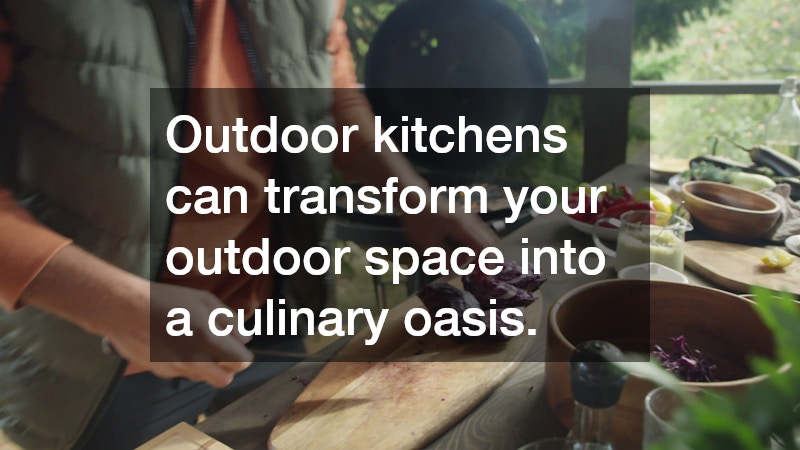
Outdoor kitchens can transform your outdoor space into a culinary oasis. By considering the recommended design elements and addressing common concerns, you’ll be well on your way to creating the perfect outdoor kitchen tailored to your needs. Whether your goals include hosting cozy family meals or vibrant social events, understanding essential materials, layouts, and features paves the way for a successful project. Alongside professional guidance, these insights into design can lead to a durable, functional, and aesthetically pleasing outdoor kitchen.